For Schools
Speech and Language Therapy Support for Schools
Specialist, practical support to strengthen communication, inclusion, and outcomes across your setting


Specialist, practical support to strengthen communication, inclusion, and outcomes across your setting

Why Communication Matters in School
Communication plays a fundamental role in learning, relationships, behaviour, and future life chances.
When speech and language needs are identified and supported effectively, pupils are better able to access the curriculum, engage confidently in the classroom, and build relationships with their peers.
Schools today are seeing increasing numbers of pupils with communication needs – making structured, specialist support more important than ever.

At Speech Leap, we work alongside schools to ensure that these children receive timely, evidence-based support that makes a measurable difference

Thorough assessments to identify strengths and areas of need, with clear written reports, targets and practical recommendations to guide next steps.

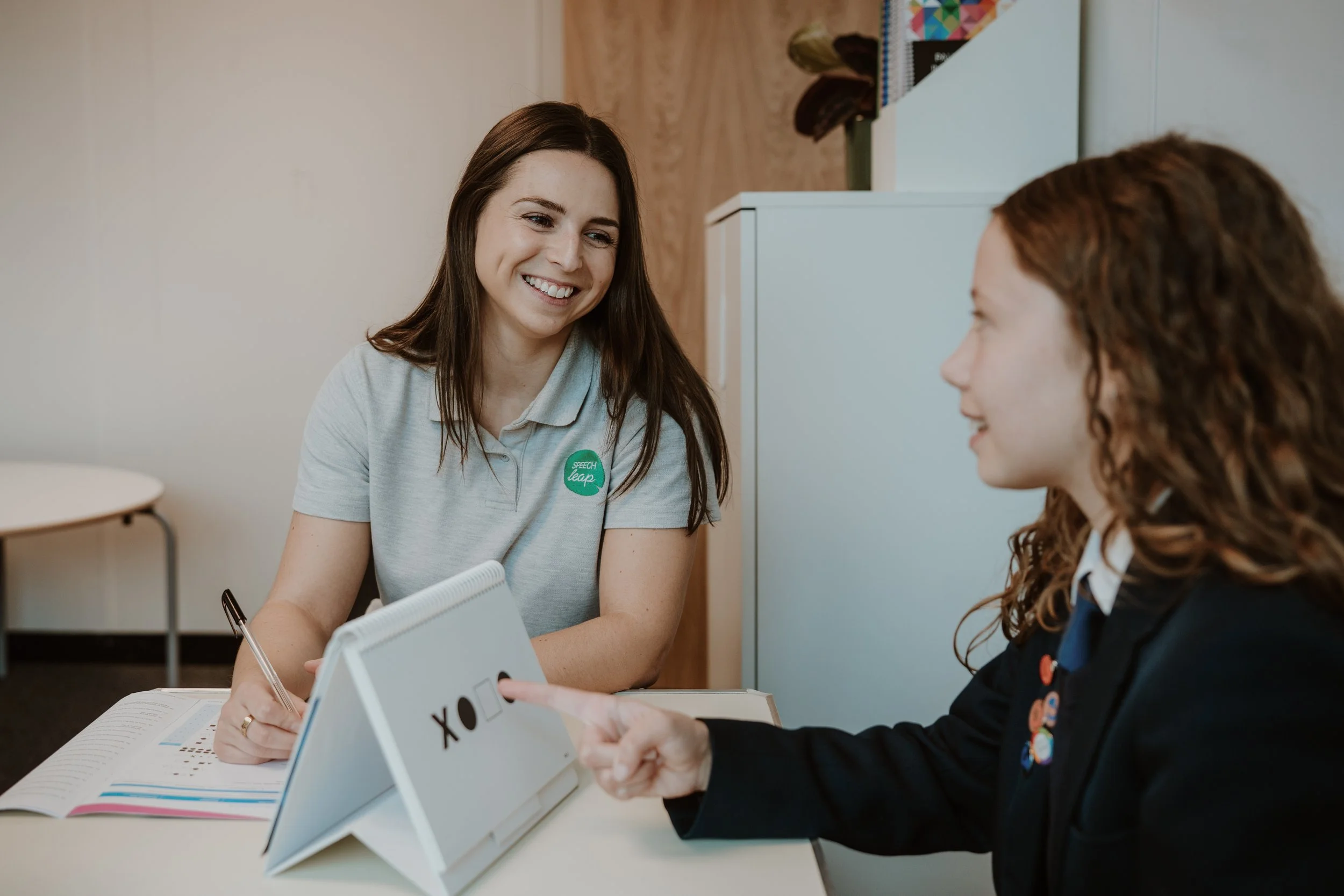
Individual and small-group therapy delivered in school, designed to develop communication skills and improve access to learning.

Bespoke training sessions to support teaching staff with practical strategies they can implement immediately.

Support for schools to develop inclusive environments by embedding core communication strategies across the whole setting.

We work in a way that affirms and celebrates neurodiversity, promoting inclusive practices that recognise and respect individual differences.

Friendly, informative sessions that help parents support communication skills at home through everyday routines and play.

A consistent therapist across the year to ensure continuity and a strong relationship with children, teaching staff and parents.

Coordinated, joined-up support for pupils through collaborative working with SENCOs, teaching staff, and NHS therapists.

Individual tracking through measurable targets alongside our whole-school impact reports which highlight progress made and outcomes achieved across your setting.

We’ve been incredibly impressed with the impact of our weekly Speech and Language therapy sessions have been. Speech Leap has quickly built strong relationships with both staff and pupils, delivering tailored support that’s made a real difference. We've seen significant progress in communication skills across the school, especially for our most vulnerable learners. The consistent, professional input has also helped build staff confidence in supporting speech and language needs throughout the week. We would recommend Speech Leap to any school thinking of using them.
Jemma (Deputy Head, Holy Trinity Primary School)
Thank you so much for your completely superb training! The staff are still buzzing and I can’t thank you enough for the time you dedicated and the expertise you shared. You were outstanding!
Rachel (Headteacher, Kings Primary School)
I don't know what we would do without Speech Leap. Our therapist is flexible, efficient, professional, friendly and she has helped us to identify and meet needs in a much quicker timeframe than we would have with an NHS referral. She is our first port of call for SEND assessment and we really value her expertise.
Jenna (SENCO, Holden Clough Primary School)

Download our prospectus to learn how we can support your school.

Still have questions?
Our support is tailored to your setting. At the start of each half term, we hold a provision meeting to review needs and agree shared priorities. This may include assessment, intervention, staff training, parent workshops, or whole-school support. This structured approach ensures our provision remains responsive, focused, and aligned with your school’s goals.
Pupils can be identified by the SENCO or teaching staff. We support schools to use universal screening tools such as WellComm and Language Link, to highlight children who may require more in-depth assessment. We work collaboratively with school staff to prioritise pupils, ensuring those with the greatest need receive timely support. Parental consent is always obtained before assessment or intervention begins.
Yes. We provide written advice, assessment reports, and progress updates to support EHCP applications and annual reviews. Because we work with pupils regularly, we develop a detailed understanding of their strengths, areas of need, and the strategies that will make the greatest difference. Our reports are clear, comprehensive, and designed to provide practical evidence for planning and review meetings.
We use measurable targets and structured progress tracking to monitor individual pupil progress. In addition, we provide whole-school impact reports to highlight outcomes achieved and the difference our support is making across your setting. These reports can be shared with senior leaders, governors, and business managers to demonstrate value and evidence the impact of provision.
Absolutely. We work in partnership with NHS Speech and Language Therapy teams to ensure joined-up, coordinated support for pupils. Our aim is always to complement existing services, bridge any gaps in support, and strengthen overall outcomes. With consent, we’re happy to liaise directly and share reports or therapy plans to ensure consistency.
The number of pupils we can support in a day depends on the type of service being delivered, such as comprehensive assessments, individual therapy, or small-group intervention. We prioritise quality and meaningful progress over volume, ensuring each pupil receives focused, personalised support.
For assessments, we typically carry out one to two comprehensive assessments per day, allowing sufficient time for detailed evaluation, discussion, and report writing. For intervention days, we may have six to seven intervention sessions, seeing pupils individually or in small groups, depending on the needs of the school.
Yes. We understand that some schools require targeted or short-term support. We offer individual pupil assessments, DLD assessment and diagnosis packages, and standalone training sessions with follow-up input where appropriate.
For schools seeking more sustained provision, we also provide half- and full-day weekly packages of support tailored to your setting.
For more information about our short-term and standalone options, please request a copy of our Schools Prospectus.
We begin with an initial conversation to understand your setting, priorities, and current provision. From there, we outline suitable support options and provide clear next steps. We can arrange a visit to your setting and share our Schools Prospectus, which provides detailed information about our service model and partnership packages.